
Why Fluoride Treatment for Kids
Fluoride treatment for kids is a proven way to prevent cavities and strengthen developing teeth. Here’s what every parent needs to know:
Key Fluoride Treatment Options:
– Professional varnish – Applied every 3-6 months at dental visits
– At-home fluoride toothpaste – Rice-grain amount for toddlers, pea-size for older kids
– Fluoride supplements – For areas without fluoridated water
– Prescription gels/rinses – For high-risk children over age 6
When to Start: Begin fluoride treatments when your child’s first tooth appears (around 6 months). Professional treatments should start by age 1 and continue through age 16.
Safety First: When used properly, fluoride is safe and effective. The key is using the right amount – too little won’t protect teeth, too much can cause white spots.
As a parent, you want to give your child the best start for lifelong oral health. The research is clear: children who receive regular fluoride treatments have up to 40% fewer cavities than those who don’t. Combined with dental sealants, fluoride can reduce cavity risk by an impressive 95%.
I’m Dr. Chris Cerasaro DMD, and I’ve been helping Charlotte families steer pediatric dental care decisions for over a decade. Through my experience providing fluoride treatment for kids at Crown Point Family Dentistry, I’ve seen how proper fluoride use can transform a child’s oral health journey. Let me walk you through everything you need to know to make informed decisions about your child’s dental care.
Fluoride treatment for kids vocab to learn:
– dental fillings for kids
– dental sealants for children
Fluoride 101: How This Mineral Shields Young Teeth
Think of fluoride as your child’s tooth superhero. This naturally occurring mineral found in water, soil, and many foods acts like an invisible shield, protecting developing teeth from cavity-causing bacteria.
Here’s what makes fluoride treatment for kids so powerful: it works around the clock to strengthen tooth enamel and make it more resistant to acid attacks. Every time your child enjoys a snack or drink, harmful bacteria in their mouth produce acids that try to weaken their teeth through demineralization. Without protection, these acid attacks eventually create cavities.
But fluoride fights back through remineralization – essentially rebuilding and strengthening weakened enamel. It’s like having a repair crew that works while your child sleeps, making their teeth stronger than before.
Fluoride protects teeth in two main ways: topical and systemic. Topical fluoride works directly on tooth surfaces from sources like toothpaste, professional varnishes, and rinses. Systemic fluoride comes from fluoridated water and supplements, becoming part of developing tooth structures from the inside out.
The Science Behind Fluoride
At the microscopic level, your child’s tooth enamel consists of tiny crystals called hydroxyapatite. When bacterial acids attack, these crystals start to dissolve. Here’s where fluoride becomes the hero of the story.
Fluoride helps create fluorapatite – a stronger, more acid-resistant version of the original enamel structure. It’s like upgrading your child’s natural tooth armor to premium protection.
Fluoride also acts as an acid neutralizer, helping balance the pH levels in your child’s mouth. Combined with saliva’s natural buffering ability, fluoride creates a powerful defense system that works 24/7.
The most exciting part? Fluoride doesn’t just prevent new cavities – it can actually reverse early stages of tooth decay.
Common Sources at Home
Fluoridated water from your tap is one of the most effective sources, reducing cavity risk by about 25%. Most of our community water systems provide this benefit automatically.
Fluoride toothpaste is your daily defense partner. ADA-approved toothpastes contain the right concentration (1000-1500 parts per million) to be effective yet safe. The secret is using the correct amount and making sure little ones don’t swallow it.
For families in areas without fluoridated water or children at higher cavity risk, dietary supplements might be recommended. These come as drops for babies or tablets for older kids, but should only be used with professional guidance to ensure proper dosing.
Fluoride Treatment for Kids: Options That Work
When it comes to protecting your child’s teeth, fluoride treatment for kids offers several proven options that actually work. Think of it like choosing the right sunscreen – different strengths and application methods work better for different situations and ages.
The beauty of modern fluoride treatments is their flexibility. We can customize protection based on your child’s specific needs, age, and cavity risk. Some children need just basic protection, while others benefit from more intensive approaches.
Professional treatments pack a much stronger punch than what you’ll find at home. While your regular toothpaste contains 1,000-1,500 parts per million of fluoride, professional varnish delivers up to 22,600 ppm. That’s like comparing a gentle rain to a power washer – both help, but one provides serious protection when you need it most.
The science backs this up beautifully. Scientific research on fluoride varnish effectiveness shows that children receiving regular treatments develop 12-43% fewer new cavities compared to those without treatment.
We also have gels and foams that work wonderfully for school-age children, plus silver diamine fluoride for special situations where we need to stop cavity progression quickly.
In-Office Fluoride Treatment for Kids: What to Expect
Walking into our office for your child’s first fluoride treatment? Here’s the good news – it’s probably the easiest part of their dental visit. Most kids are pleasantly surprised by how simple and quick the whole process is.
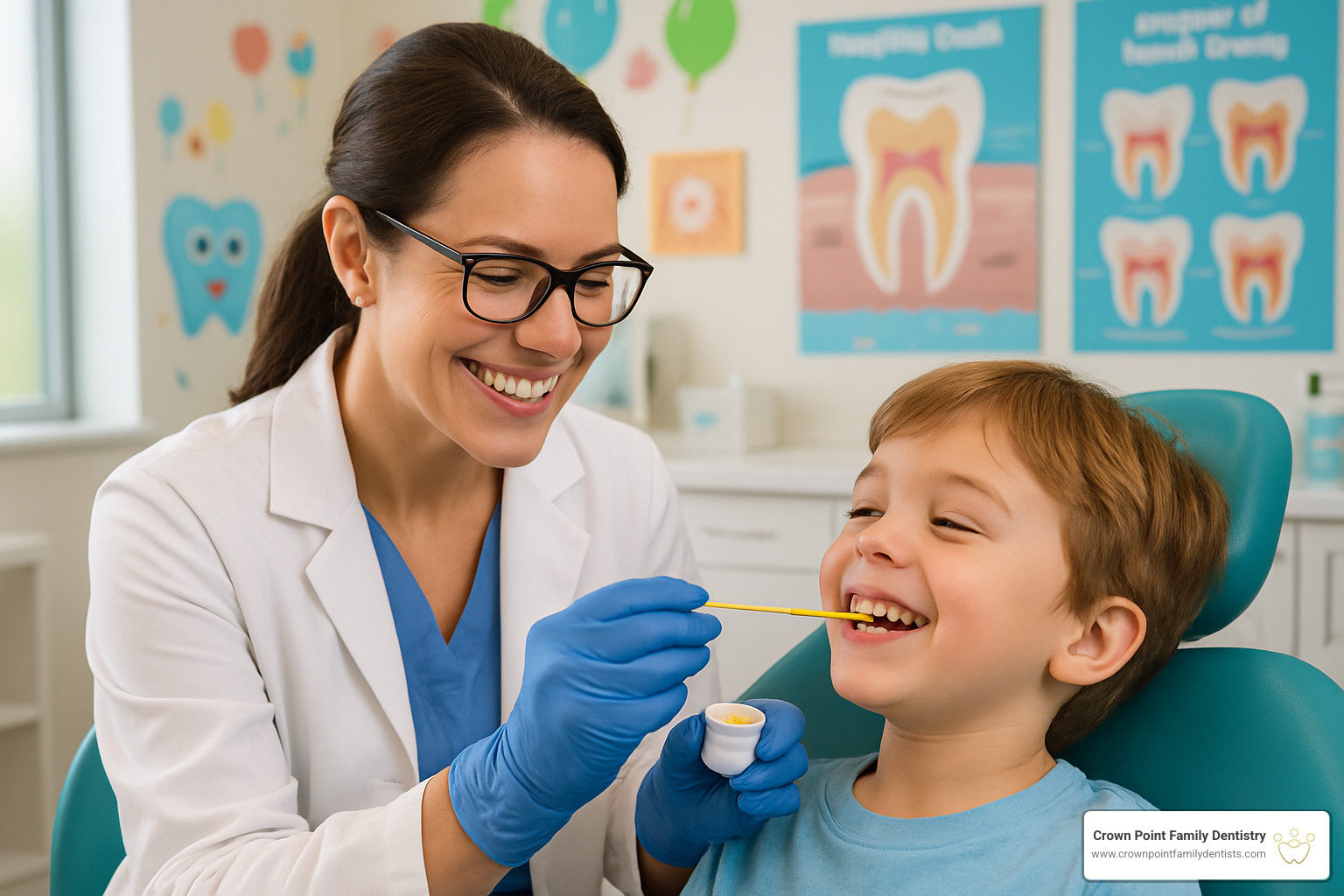
We use a sticky varnish that we brush on with a small applicator, almost like painting their teeth with a tiny paintbrush. The varnish hardens when it touches saliva, creating a protective shield that slowly releases fluoride over the next several hours. The whole application takes just a few minutes, and it’s completely painless.
Your child might notice a slightly different taste, but we have fruity flavors that most kids actually enjoy. Some even ask if they can have the “tooth paint” again at their next visit!
The only rule after treatment is our 30-minute rule – no eating, drinking, or brushing for half an hour. This gives the fluoride time to really soak into the tooth enamel.
At-Home Fluoride Treatment for Kids: Tips for Parents
Home care is where the magic really happens between dental visits. The secret is getting the dosing just right – not too little, not too much, but perfectly matched to your child’s age and development.
For your tiniest tots under 3 years old, think small. We’re talking about a rice-grain smear of fluoride toothpaste – literally the size of a grain of rice. Supervised brushing is essential at this age because toddlers haven’t mastered the art of spitting yet.
Once your child hits 3 years old, you can graduate to a pea-size paste amount. Keep supervising until they’re around 7 or 8 years old and can brush properly on their own. This is also when you might consider adding a mouth rinse for children age 6 plus who can reliably spit it out.
Comparing Application Methods
Different fluoride applications work better for different situations and ages. Varnish remains our go-to choice for most children because it sticks well to teeth and doesn’t require much cooperation from wiggly little patients. It contains the highest fluoride concentration at 22,600 ppm and provides protection for hours after application.
Gel and foam treatments contain 12,300 ppm fluoride and work beautifully for school-age children who can sit still with application trays for a few minutes.
For ongoing daily protection, fluoride rinses with 230-900 ppm work well for children over 6 who won’t swallow them. These provide that extra boost of protection, especially helpful for kids with braces or those prone to cavities.
When to Start & How Often: Age-Based Guidelines
The journey of fluoride treatment for kids begins earlier than most parents realize. The American Academy of Pediatric Dentistry recommends daily fluoride for children from 6 months through 16 years – essentially covering the entire development of growing teeth, from that exciting first tooth to the completion of all permanent teeth.
Professional fluoride treatments should start when your baby’s first tooth erupts, typically around 6 months. Those brand-new baby teeth are actually the most vulnerable to decay, and early protection sets the foundation for a lifetime of healthy smiles.
Many pediatricians across Charlotte are now trained to apply fluoride varnish during regular well-child visits. It’s a beautiful example of how medical and dental professionals work together to ensure no child misses out on this crucial protection.
Treatment frequency isn’t one-size-fits-all. Most children thrive with professional fluoride treatments every 6 months, perfectly timed with their regular dental checkups. But children at high risk for cavities often benefit from treatments every 3-4 months.
More info about Comprehensive Pediatric Dental Care
Infant & Toddler Milestones
The moment that first tiny tooth breaks through your baby’s gums is your cue to start brushing with a rice-grain smear of fluoride toothpaste. Yes, it’s that small! This early start establishes good habits and provides immediate protection for those precious new teeth.
For families in areas without fluoridated water, your pediatrician might prescribe fluoride drops starting at 6 months. The dosage is carefully calculated based on your child’s age and existing fluoride exposure from water and other sources.
Many pediatricians now apply fluoride varnish during routine well-child visits, which means your baby can receive protection even before their first dental appointment.
School-Age Schedules
Once your child reaches age 3, it’s time to graduate to a pea-sized amount of toothpaste. Continue supervising brushing – most children can start learning independence around age 6, but they’ll still need your guidance until age 7 or 8 to master proper technique.
Biannual professional fluoride varnish treatments work beautifully for most school-age children, fitting seamlessly into their regular dental visits. However, children who struggle with frequent cavities may benefit from quarterly treatments for extra protection.
This is also the perfect age to introduce fluoride mouth rinses for additional protection, especially for children who are cavity-prone or still mastering their brushing technique.
Teens & Braces
Teenagers face unique fluoride challenges, especially those navigating life with braces. Orthodontic appliances make thorough cleaning more difficult and create additional hiding spots where plaque loves to accumulate.
For teens with braces, we often prescribe higher-strength fluoride gels or rinses for daily home use. These prescription products provide that extra shield of protection during the vulnerable orthodontic period when cleaning is more challenging.
Is Fluoride Safe? Separating Facts From Myths
As a parent, you’ve probably heard conflicting stories about fluoride safety. Some friends swear by it, while others worry about potential risks. Let me put your mind at ease with the facts.
Fluoride treatment for kids is remarkably safe when used properly. The American Dental Association, American Academy of Pediatric Dentistry, and Centers for Disease Control have all given fluoride their stamp of approval for children. These organizations don’t make recommendations lightly – they’re backed by decades of research involving millions of children.
The secret to fluoride safety is simple: the right amount at the right time. Think of it like vitamins – your child needs them to grow healthy, but you wouldn’t give them the whole bottle at once. Fluoride works the same way.
Scientific research on water fluoridation consistently shows that community water fluoridation at the recommended level of 0.7 parts per million provides excellent cavity protection while keeping risks minimal. That’s like adding one drop to a 55-gallon drum of water.
Understanding Dental Fluorosis
The only documented risk from long-term fluoride use is something called dental fluorosis – and it’s far less scary than it sounds. Fluorosis appears as faint white lines or spots on permanent teeth, and it only occurs when children get too much fluoride while their adult teeth are still forming underground (typically between ages 1-8).
About 23% of Americans have some degree of fluorosis, but here’s the thing: most cases are so mild that only dentists can spot them. Your child certainly won’t notice, and it doesn’t affect how their teeth work or feel.
The severe fluorosis you might see in alarming internet photos – with brown staining and pitting – is extremely rare in the United States. It typically only happens with significant overexposure, like drinking well water with naturally high fluoride levels.
The current water fluoridation level of 0.7 ppm was specifically chosen to maximize cavity prevention while keeping fluorosis risk as low as possible.
Best Practices to Avoid Overexposure
Preventing fluoride overexposure is straightforward once you know the basics. The most important rule is supervising your child’s toothpaste use and teaching them to spit, not swallow. Most fluorosis cases could be prevented with this simple step.
Keep all fluoride products out of reach of young children. That colorful toothpaste tube might look like a fun snack to a 2-year-old. Store toothpaste in bathroom cabinets, not on counters where little hands can grab them.
If you’re mixing baby formula, consider using fluoride-free bottled water or ready-to-feed formulas for the first few months. This prevents overexposure during the most vulnerable period when your baby’s teeth are just starting to develop.
Monitor your child’s total fluoride intake from all sources. If your tap water is fluoridated and your child brushes with fluoride toothpaste twice daily, they’re probably getting adequate protection without needing supplements.
Fluoride vs. Sealants & Other Preventive Tools
Think of fluoride treatment for kids as just one piece of your child’s cavity-fighting puzzle. While fluoride does amazing work strengthening teeth from the inside out, it works even better when paired with other preventive tools – kind of like how a superhero team is stronger than any individual hero.
Dental sealants are fluoride’s perfect partner. While fluoride bathes all tooth surfaces with protection, sealants act like tiny umbrellas, covering the deep grooves and pits on your child’s back teeth where toothbrush bristles simply can’t reach. These molars have natural crevices that are so narrow, they’re smaller than a single toothbrush bristle!
Here’s what gets really exciting: when you combine fluoride treatments with dental sealants, you can reduce cavity risk by an impressive 95%. That’s not a typo – ninety-five percent! This dramatic protection happens because each treatment guards different vulnerable areas using completely different approaches.
Sugar control in your child’s diet is another powerful tool that costs nothing but makes a huge difference. Even the best fluoride treatments can’t completely overcome a diet filled with frequent sugary snacks and drinks.
Some families also benefit from xylitol products – this natural sugar substitute actually helps fight cavity-causing bacteria. You’ll find xylitol in special chewing gums and mints designed for oral health.
More info about Dental Sealants for Children
Why Combine Strategies?
The magic happens in the synergy between different preventive approaches. No single treatment – not even fluoride – can provide the comprehensive protection that comes from combining multiple strategies thoughtfully.
Picture your child’s mouth as a castle that needs defending. Fluoride strengthens the castle walls (tooth enamel), sealants add protective barriers over the most vulnerable gates (molar grooves), good brushing removes enemy forces (harmful bacteria), and smart eating habits reduce the number of attacks (acid production).
This layered approach creates what I like to call “enamel armor” – multiple levels of protection that work together seamlessly. When one defense mechanism faces a challenge, the others step in to maintain protection.
The long-term cost savings are remarkable too. Investing in prevention during childhood pays dividends for decades. The cost of fluoride treatments, sealants, and good home care is always less than treating cavities, root canals, and other problems that develop when prevention fails.
Frequently Asked Questions about Fluoride Treatment for Kids
What happens during a fluoride varnish visit?
When you bring your child in for fluoride treatment for kids, you’ll find the process is surprisingly simple and stress-free. I always start by explaining what we’re going to do – transparency helps both parents and children feel comfortable.
First, we’ll gently clean your child’s teeth to remove any plaque or food particles. Then comes the fun part – I use a small, soft brush to paint the fluoride varnish directly onto each tooth. The varnish has a sticky consistency at first, but it hardens almost immediately when it touches your child’s saliva.
Most children are pleasantly surprised by the fruity flavors we offer – bubble gum and cherry are particularly popular! The entire application takes just a few minutes, and there are no shots, drilling, or any discomfort involved.
After the treatment, your child needs to avoid eating, drinking, or brushing for just 30 minutes to let the fluoride do its work. After that, they can return to normal activities.
Can my child get too much fluoride?
This is probably the question I hear most from concerned parents, and I completely understand the worry. The good news is that fluoride overexposure is easily preventable when you know what to watch for.
The main concern with too much fluoride is dental fluorosis – those white spots or lines you might see on some people’s teeth. While this is purely cosmetic and doesn’t harm tooth health, it’s understandably something parents want to avoid.
Prevention is straightforward with proper supervision. For children under 3, use only a rice-grain-sized smear of fluoride toothpaste. Once they reach age 3, you can increase to a pea-sized amount. Always supervise brushing and teach your child to spit out the toothpaste rather than swallow it.
Keep all fluoride products stored safely out of reach – curious toddlers love the taste of toothpaste and may try to eat it like candy.
Does bottled water change my child’s fluoride needs?
Absolutely – this is something many Charlotte families don’t realize. If your family primarily drinks bottled water, your child is likely missing out on the cavity-fighting benefits of fluoridated tap water.
Most bottled water contains little to no fluoride, which means children who drink it exclusively may need additional fluoride protection. Some bottled water brands do add fluoride – you can check the label to see if yours does – but the levels are typically much lower than what you’d find in optimally fluoridated tap water.
Home water filtration systems can also affect fluoride intake. While basic carbon filters usually don’t remove fluoride, reverse osmosis systems remove most fluoride along with other minerals. If you use this type of system, let us know so we can adjust your child’s fluoride recommendations accordingly.
Ready to Safeguard Your Child’s Smile?
At Crown Point Family Dentistry, we understand that choosing the right fluoride treatment for kids can feel overwhelming with so much conflicting information available online. That’s why we’ve dedicated over 50 years to helping Charlotte families steer these important decisions with confidence and peace of mind.
What sets us apart is our personalized, non-corporate approach. We’re not a chain clinic rushing through appointments – we take the time to really get to know your child and understand their unique oral health needs. Some children thrive with standard preventive care, while others need more intensive fluoride therapy due to factors like diet, genetics, or medical conditions.
Our experienced team combines advanced dental technology with the personal touch that comes from building genuine relationships with our patients. We’ve watched countless children grow up with healthy, beautiful smiles, and we’d love to be part of your family’s oral health journey too.
Whether your little one needs their very first fluoride treatment or you’re seeking guidance on the best home fluoride routine, we’re here to support you every step of the way. We believe in educating parents so you can make informed decisions that feel right for your family.
More info about The Role of Pediatric Dentistry in Long-Term Oral Health
Ready to give your child the best foundation for lifelong oral health? Crown Point Family Dentistry is your trusted family dentist for effective fluoride treatment for kids that truly makes a difference. Schedule your consultation today, and take the first step toward protecting your child’s precious smile for years to come!
