
Dental Bridges Charlotte NC
Restore your smile with a custom dental bridge by our expert team.
Bridge the Gap in Your Smile with A Dental Bridge
Missing teeth not only impact your smile but they can affect your confidence, bite, and overall oral health. We offer custom dental bridges in Charlotte designed to restore the function and appearance of your smile. Whether you’re replacing one tooth or several, our experienced team is here to help you regain a natural-looking, long-lasting solution tailored to your needs.
Bridges are used to replace missing teeth. They are made with synthetic materials that are secured in the mouth with crowns applied to the teeth adjacent to the tooth which is missing. Bridges help prevent the teeth surrounding the missing tooth from drifting out of position and prevent gum disease, tooth decay, or the loss of other teeth.
Our dental bridges are custom-designed to restore both the function and appearance of your smile. A dental bridge fills the space left by one or more missing teeth by anchoring a false tooth (or teeth) between two crowns placed on the adjacent natural teeth or dental implants. This restoration not only improves your bite and speech but also helps maintain the alignment of your remaining teeth. We use high-quality materials to ensure your bridge looks natural, feels comfortable, and supports your long-term oral health.

Dental Bridge Specifics
- Purpose: Replace one or more missing teeth
- Structure: Pontic(s) anchored by crowns or implants
- Procedure: Prepare abutments + impression + placement
- Materials: Porcelain, composites, gold, ceramics, blends
- Benefits: Function, aesthetics, structural support
- Maintenance: Special tools plus regular dental check-ups
- Lifespan: 10–15 years or longer with maintenance
Precision and Personalized Care
As a trusted dental bridge specialist in Charlotte, we provide personalized care with every dental bridge placement. Our process involves preparing the teeth for placement utilizing accurate impressions for the bridge fabrication, and then expertly fitting the custom-made bridge. Our attention to detail ensures that each dental bridge is aesthetically pleasing, comfortable and functional.
The Dental Bridge Process
The dental bridge process typically involves preparing the supporting teeth, taking precise impressions or digital scans, and placing a custom bridge designed to restore both function and appearance.
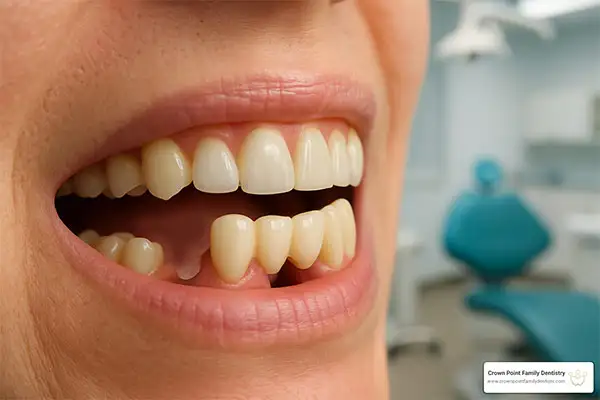
Personalized Treatment Plan
The preparation stage for getting a dental bridge typically involves reshaping the teeth on either side of the gap to make room for the crowns that will anchor the bridge. During this visit, our dental team will also take precise impressions of your teeth, which are used to create a custom bridge that fits seamlessly with your natural bite and smile. A temporary bridge may be placed to protect your teeth and gums while your permanent restoration is being crafted.
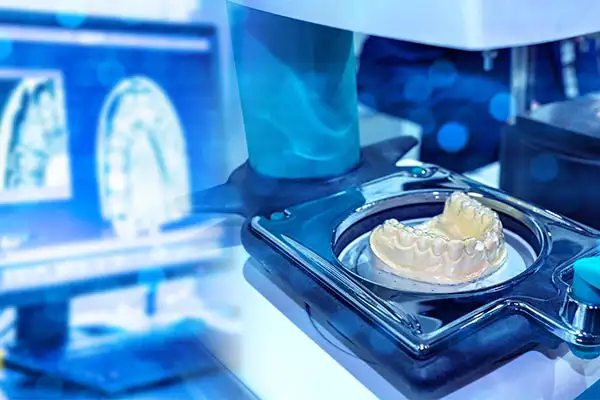
Preparation Stage
Each dental bridge is custom crafted to ensure a precise fit, natural appearance, and lasting durability. Using detailed impressions and advanced materials, your bridge is carefully designed to match the shape, size, and color of your surrounding teeth for a seamless restoration that blends beautifully with your smile and restores proper function.
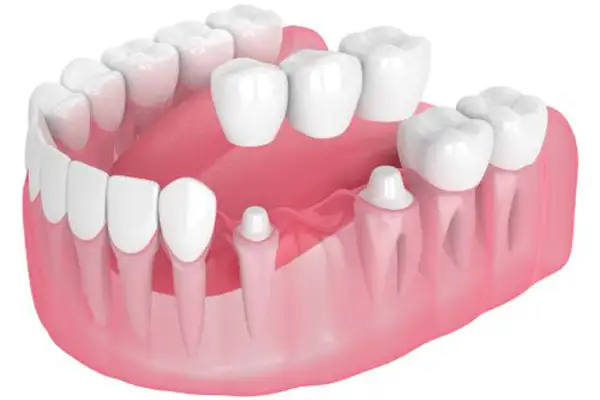
Placement of the Dental Bridge
Once your custom dental bridge has been fabricated, it is carefully placed and securely bonded to the prepared abutment teeth or dental implants. During this appointment, our dental team will ensure the bridge fits comfortably, aligns properly with your bite, and blends naturally with your surrounding teeth. Any necessary adjustments are made to ensure a secure and functional fit, helping you speak, chew, and smile with confidence.
Can a bridge replace more than one missing tooth?
Yes, when the missing teeth are next to each other, a bridge is possible as long as the supports can carry the span. Two or three consecutive teeth are commonly replaced with one bridge. Implants are typically used when a longer span puts more leverage on the abutments. During your exam, the span will be measured, and the root surface of each abutment will be considered to help determine is a bridge is the recommended option for tooth replacement.
★★★★★
I have been going to Crown Point in Charlotte for the past year and they are GREAT! As a 20 something year old who is navigating dental/health insurance on their own and was trying to find a new dentist, I am so grateful to have found Crown Point. This dental office has treated me like family, by helping me navigate what treatment I need, what dental insurances can help me down the road and they do exceptional dental care. Would highly recommend!
Types of dental bridges
The right type of dental bridge depends on where the missing tooth is located, the condition of the neighboring teeth, the strength of your bite, and how much support the replacement tooth will need.
- Traditional dental bridge
A traditional bridge uses crowns placed on the teeth on both sides of the gap to support one or more replacement teeth, called pontics. This design is commonly considered when the supporting teeth already need crowns or can safely support them without unnecessarily removing healthy tooth structure.
- Cantilever bridge
A cantilever bridge is supported by a tooth on only one side of the gap. Because that places more stress on the supporting tooth, this design is used selectively. It may be appropriate for certain smaller front teeth where biting forces are lower and only one suitable supporting tooth is available. Cantilever bridges are generally not the preferred design for replacing molars.
- Maryland (resin-bonded) bridge
A Maryland bridge uses thin wings bonded to the backs of the neighboring teeth rather than covering those teeth with full crowns. This allows the dentist to preserve more natural tooth structure.
A resin-bonded bridge may be an option for replacing a single front tooth when the neighboring teeth are healthy and biting forces are relatively light. It may not be suitable for patients with a heavy bite or when the supporting wings could be visible through thin or translucent enamel.
- Implant-supported bridge
Instead of relying on neighboring teeth for support, an implant-supported bridge is anchored by dental implants placed in the jaw. This allows missing teeth to be replaced without preparing healthy adjacent teeth for crowns.
Depending on the number of missing teeth, available bone, spacing, and other clinical factors, implants may support several replacement teeth. Because treatment planning and placement are different from a tooth-supported bridge, we cover this option in more detail on our dental implants page.
Charlotte’s Dental Bridge Specialists
We have the experience and expertise to help restore your smile with custom dental bridges!
Member, Academy of General Dentistry
Member, International Congress of Oral Implantologists
The ICOI is the largest dental implant organization for ongoing education and collaboration with events that take place around the world and feature talks from prominent experts in implant dentistry.
Community Leader in Dentistry
Crown Point Family Dentistry is proud to be recognized as a trusted community leader in Charlotte, serving local families with compassionate, high-quality dental care for over 60 years. As the official team dentists for both the Charlotte Knights and the Charlotte Checkers, our practice brings the same level of professional care trusted by elite athletes to every patient we see. Our long-standing commitment to excellence, personal service, and community involvement reflects our deep roots in Charlotte and our dedication to keeping our city smiling on and off the field.
Dental Bridges FAQs
What is the difference between a dental bridge and a dental implant?
The main difference between a dental bridge and a dental implant lies in how they replace a missing tooth and how they are supported. A dental bridge uses adjacent natural teeth (or sometimes implants) as anchors to hold a false tooth (pontic) in place. Whereas, a dental implant is a standalone tooth replacement that uses a titanium post surgically placed into the jawbone to act as a root.
How a bridge differs from an implant or partial denture
A traditional dental bridge is supported by the teeth next to the gap, while a dental implant replaces the missing tooth from the root up and does not require those neighboring teeth to be crowned. A partial denture is removable and uses the remaining teeth for support.
Each option has its own advantages. A bridge can often be completed more quickly than implant treatment because there is no healing period for an implant to integrate with the jawbone. An implant preserves the neighboring teeth and also helps maintain bone in the area of the missing tooth. A partial denture can replace several missing teeth in different areas without preparing adjacent teeth for crowns.
The best choice depends on the condition of the surrounding teeth, the amount of available bone, the number and location of missing teeth, and whether you prefer a fixed or removable restoration. Dr. Cerasaro will consider these factors with you and recommend the option that best fits your oral health and long-term needs.
How do I care for my dental bridge?
With proper care, a dental bridge can function comfortably for many years. Dr. Cerasaro recommends brushing carefully along the gumline twice a day and cleaning beneath the replacement tooth each day with a floss threader, interdental cleaner, or water flosser. Keeping this area clean helps protect the gums and the natural teeth that support the bridge.
Many well-maintained dental bridges last 10 to 15 years or longer. Longevity depends on the health of the supporting teeth, the length of the bridge, your bite, and whether you clench or grind your teeth. If you grind your teeth at night, Dr. Cerasaro may recommend a custom night guard to help protect both the bridge and your natural teeth.
If your bridge ever feels loose, your bite feels uneven, the gum beneath it remains sore, or floss begins catching around an edge, contact Crown Point Family Dentistry. Dr. Cerasaro can evaluate the bridge and the supporting teeth to determine whether a simple adjustment or repair is needed before a small problem becomes more difficult to treat.
Do you have to crown the teeth next to the gap
With a traditional dental bridge, the teeth on either side of the gap are typically prepared for crowns. These teeth, called abutment teeth, support the replacement tooth or teeth between them. If the neighboring teeth already need crowns because of large fillings, damage, or other concerns, a traditional bridge may provide both restoration and support for the missing tooth.
When the adjacent teeth are healthy and have never been restored, Dr. Cerasaro may discuss alternatives that preserve more of their natural tooth structure. A dental implant, for example, replaces the missing tooth without requiring crowns on the neighboring teeth.
A Maryland bridge is another more conservative option in certain situations. Instead of full crowns, it uses small wings bonded to the backs of the adjacent teeth. Because this type of bridge works best under specific conditions, Dr. Cerasaro will consider the location of the missing tooth, your bite, and the health of the surrounding teeth when recommending the best approach.
How long does the process take?
A straightforward tooth-supported bridge is usually two or three visits over two to three weeks: planning, preparation and temporary, then delivery. Extra time is added when an abutment needs a core or endodontic treatment, when the gums need to heal first, or when the span is implant-supported and the implants must integrate.
Does a bridge stop bone loss in the gap?
No. Because the pontic sits on the gum, it does not replace the root, so the bone under that site still remodels. That is acceptable for many patients, but it is the reason an implant is preferred when preserving that bone matters for a later plan or for the shape of the ridge.
Can children get a bridge?
We rarely treat growing patients with a permanent adult bridge. A space maintainer or a pediatric restoration is used until the bite and the adjacent teeth have finished changing.
Call today to schedule your appointment and take the first step toward restoring your smile with dental bridge at our convenient Monroe Road clinic in Charlotte.
Phone
Address
9101 Monroe Rd #130, Charlotte, North Carolina 28270
Hours of Operation
Monday – Thursday: 8:00 AM – 5:00 PM
Friday 8:00 AM – 1:00 PM
Saturday & Sunday Closed